

Top Career Opportunities After a Safety Officer Course
With the advent of legislation enforcing the observance of job safety, and with a rise of its importance in the construction industry, factories, and energy projects all over Pakistan and the Gulf, workplace safety is no longer a choice — it’s a rule. Which is why safety officer jobs are one of the hottest career paths in the Occupational Health and Safety (OHS) world today.
However, before you even begin applying, you may have some questions in mind: What are the requirements in reality? How much does a safety officer make in Pakistan? Exactly what is the daily routine like? Most important of all — what happens after you complete your course?
This guide provides step-by-step answers to all of it.
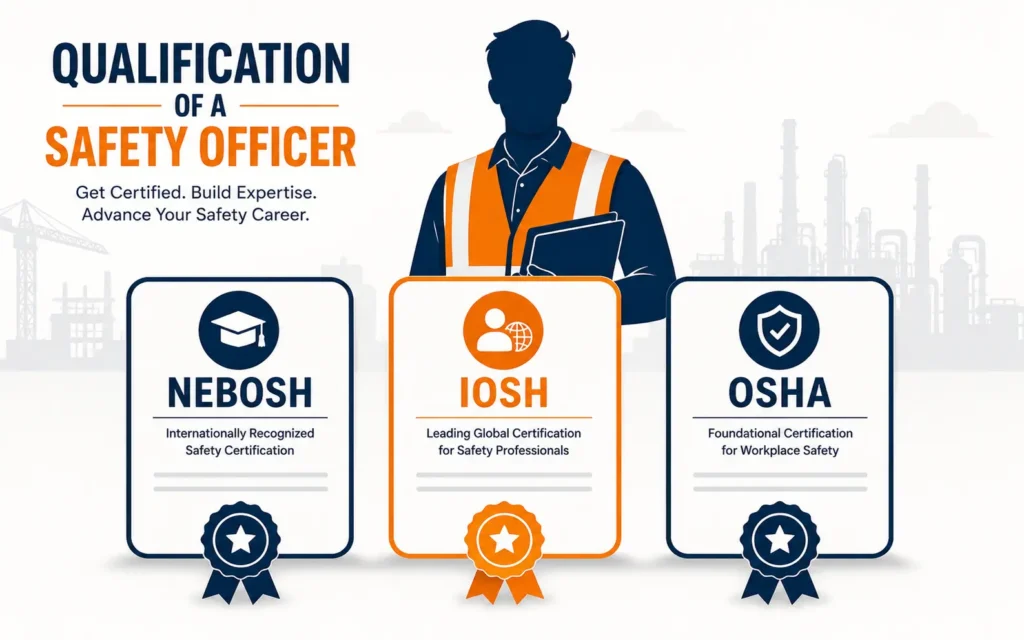
What Is the Qualification of a Safety Officer?
The good news: you don’t need a four-year safety degree to enter this field. A short, recognized certification combined with the right practical knowledge is often enough to land your first role as a safety officer or HSE assistant.
If you are seeking to become a safety officer, it is a combination of education and recognized safety certification that is required, and not one or the other. Employers are seeking:
Intermediate or Bachelor degree, preferably in engineering or science related field, but not always required
Any recognised safety certificate e.g. NEBOSH IGC, IOSH Managing Safely, OSHA 30 Hour
Knowledge of the First Aid and Fire Safety procedures.
Other qualifications such as Advanced Diploma in Safety or environmental safety training, for senior job positions.
When you’re not sure which certification to pursue, we’ve put together a guide to compare OSHA and IOSH courses for various career stages.
The good news is that you don’t have to get a four-year degree in safety to break into this field. This short recognised certificate with appropriate practical skills can often secure that first job as a Safety Officer or a HSE assistant.
What Is the Role of a Safety Officer?
The role of a safety officer is to recognise risk, ensure safety and ensure everyone leaves the site as they found it. These daily tasks usually encompass site inspections, toolbox talks, incident reporting, PPE checks and safety documentation.
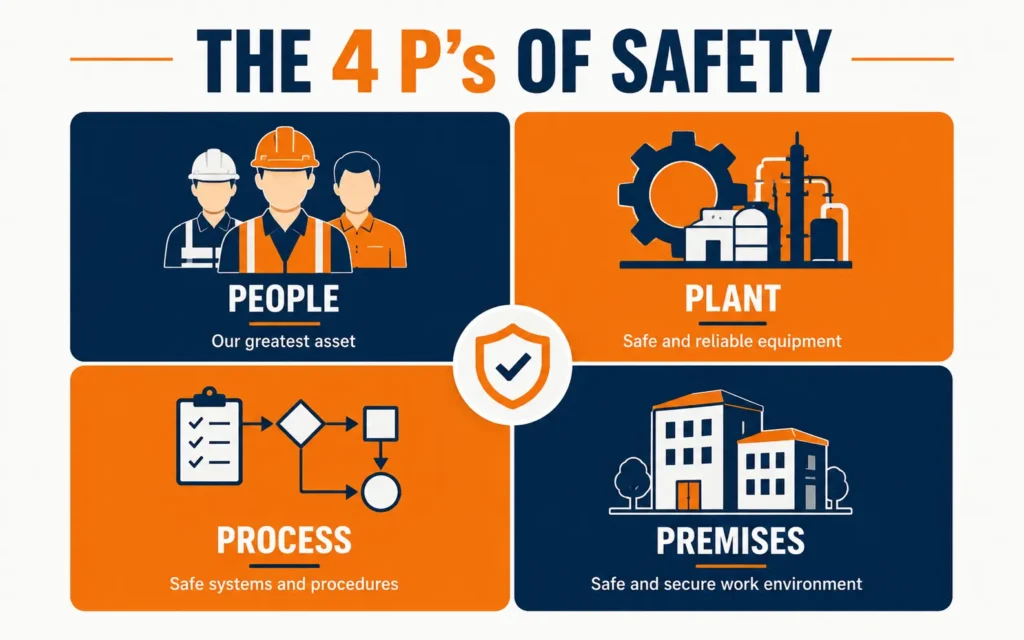
What Are the 4 P’s of Safety?
The 4 P’s are a simple framework safety officers use to assess risk on any site:
- People — who could be affected by a hazard
- Plant — machinery and equipment safety
- Process — how the work is actually carried out
- Premises — the physical condition of the worksite itself
What Are 10 Safety Rules Every Safety Officer Enforces?
Although these rules are different in different workplaces, there is a basic set of things that most safety officers in Pakistan are expected to do, such as wearing the appropriate PPE at all times, knowing how to lock out/tag out a machine, reporting hazards as soon as they are noticed, never removing or bypassing machine guards, making sure walkways are clear, operating equipment at height with fall protection, using permit to work systems, attending daily safety briefings, knowing the pathway to the emergency exit, and never operating the equipment without authorization.
What Is the Golden Rule of Safety?
The most widely accepted golden rule in occupational safety is simple: no task is so urgent or important that it cannot be done safely. If a job can’t be completed without putting someone at risk, it should stop until it can be made safe.
What Are 7 Safety Tips for the Workplace?
- Always wear the correct PPE for the task
- Report hazards immediately, don’t wait
- Keep emergency exits and walkways clear
- Never skip a permit-to-work step
- Attend every toolbox talk and safety briefing
- Inspect tools and equipment before use
- Know your nearest first aid point and fire extinguisher location
How Do You Introduce Yourself as a Safety Officer?
Employers look for a brief, assertive opening in interviews that communicates your certification, hands-on experience and attitude, rather than your job title. The good format is: your name, your certification (NEBOSH IGC or IOSH certified), your industry experience/site exposure, and 1 example of how you have responded to a safety issue. Keep under 60 seconds; start with the results and not credentials.
What Is the Salary of a Safety Officer in Pakistan?
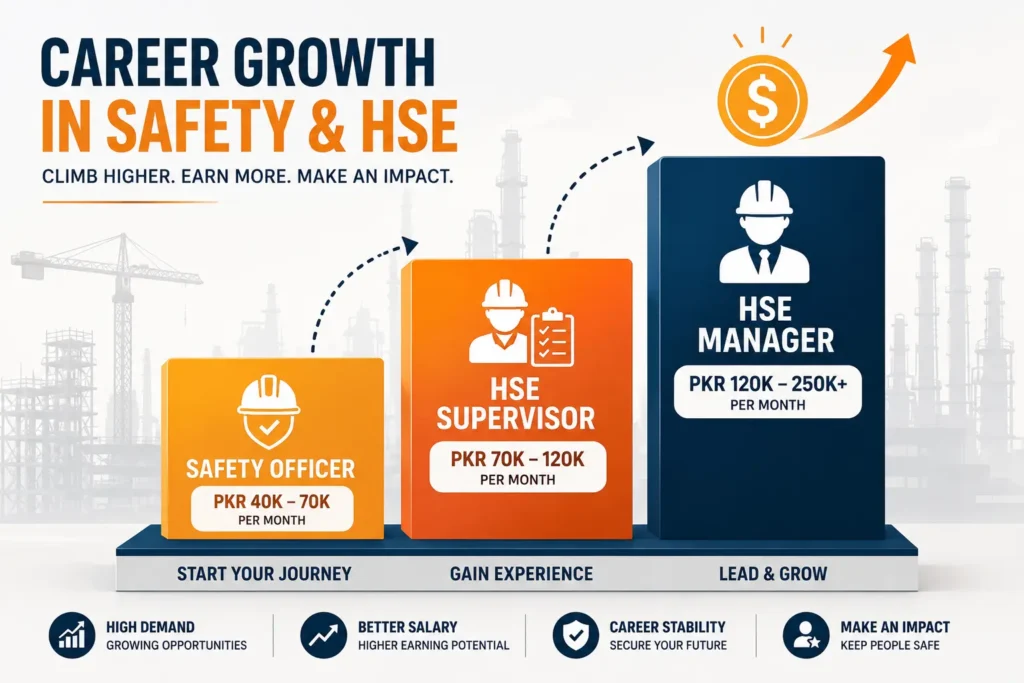
The salary of a safety officer in Pakistan depends on various factors, such as their level of certification, the industry they work in, and their experience. Generally speaking, entry-level safety officers with a basic certification earn less, while better-paying safety officers have NEBSH or IOSH credentials, and even more specifically, one who has site experience has a more significant pay increase.
What Is the Minimum Salary of a Safety Officer?
The salary of safety officers in Pakistan also depends upon the level of their certification, industry and years of experience. Lower level safety officers with a basic safety certificate usually earn less, but higher level safety certificates (such as NEBSH, IOSH) and/or experience in safety work (especially on site) definitely have an impact on salary.
What Is the Highest Salary of a Safety Officer?
Advanced qualifications such as NEBOSH IGC or NEBOSH Diploma, with some years of on-site experience, in particular within oil & gas, construction megaprojects, or in the Gulf region are generally considered as the top safety officer positions. The most significant salary increases are typically from “Safety Officer” to “HSE Supervisor” or “HSE Manager.
Which Is Better: QC or Safety Officer?
It is based on your passion and career aspirations, not the “best” job. The job of a Quality Control (QC) officer is to deal with product/process quality standards, and a Safety Officer who is responsible for protecting people and preventing accidents. Career paths into HSE management are typically clear, and jobs for safety officers are fairly widespread in both the construction and oil & gas industries, as well as in manufacturing. There’s a lot of potential for growth in QC jobs, especially in manufacturing-heavy industries, the question is whether that’s more appealing to you than working with compliance and quality systems, or to hazard prevention and onsite safety leadership.
Top Career Opportunities After a Safety Officer Course
Once you’re certified, here’s where safety officer jobs typically lead:
- Construction sites — as a site safety officer or HSE supervisor
- Oil, gas & energy projects — often the highest-paying sector for safety professionals
- Manufacturing & industrial plants — focusing on machine safety and process hazards
- Corporate HSE departments — managing safety policy, training, and compliance
- Gulf-based projects — many Pakistani safety officers move abroad after gaining 1–2 years of local experience plus an internationally recognized certification
Can I Get a Job After NEBOSH?
Yes — and in many cases NEBosh certification will greatly enhance your chances of employment over entry level courses. NEBSH IGC is a good sign of technical safety knowledge and is one of the most useful qualifications for securing mid-level and senior level HSE jobs such as Safety Officer, HSE Supervisor, HSE Coordinator in all parts of Pakistan and the Gulf.
Final Thoughts
Safety officer jobs are indeed not only stable but also becoming more and more sought after as more industries in Pakistan are implementing formal HSE practices. The obvious route is to become certified, know the role from head to toe, gain site experience and continue to work towards further qualifications such as the NEBosh certificate at a higher level.
NEBosh, IOSH, OSHA and Safety Officer certification courses are provided at STCS (Smart Trainings and Consultancy Services) to help you move from “just certified” to “job ready”. Check out our safety courses and/or contact our team to determine the best place to start your career.
Most employers look for a minimum of intermediate/bachelor’s level education plus a recognized safety certification such as NEBOSH, IOSH, or OSHA. Practical exposure to First Aid and Fire Safety is also a strong advantage.
Salaries vary based on certification level, industry, and experience. Entry-level roles start on the lower end, while NEBOSH or IOSH-certified officers with site experience — especially in oil & gas or construction — earn noticeably more.
Neither is universally better — it depends on your interests. QC officers focus on quality systems, while safety officers focus on hazard prevention and worker protection. Safety officer roles generally offer a clearer path into HSE management.
The golden rule is that no job is so urgent that it can’t be done safely. If a task can’t be performed without risk, it should be paused until proper safety measures are in place.
Yes. NEBOSH certification is widely recognized by employers in Pakistan and the Gulf and significantly strengthens your chances of landing mid-level to senior HSE roles, including Safety Officer and HSE Supervisor positions.